In what will surely go down as one of the greatest matches in football history, Argentina and France played out a 3–3 draw in the 2022 FIFA World Cup Final before Argentina lifted the trophy on penalties. Lionel Messi scored twice and was named Man of the Match, and Argentina claimed their third World Cup title — their first since 1986 — in dramatic fashion.
From a tactical perspective, this final wasn’t just about moments of magic — it was about structure, spatial occupation, and controlled progression. France’s pass flow data shows a team reliant on deeper build-up and lateral circulation, struggling to find clear avenues into Argentina’s half — especially in the first 70–80 minutes of play. Their forward progression was limited until late transitions finally unlocked by quick counter-attacks. Argentina, by contrast, found more purposeful progression corridors, particularly through central lanes and the right half-space.
Argentina vs France Pass Flow
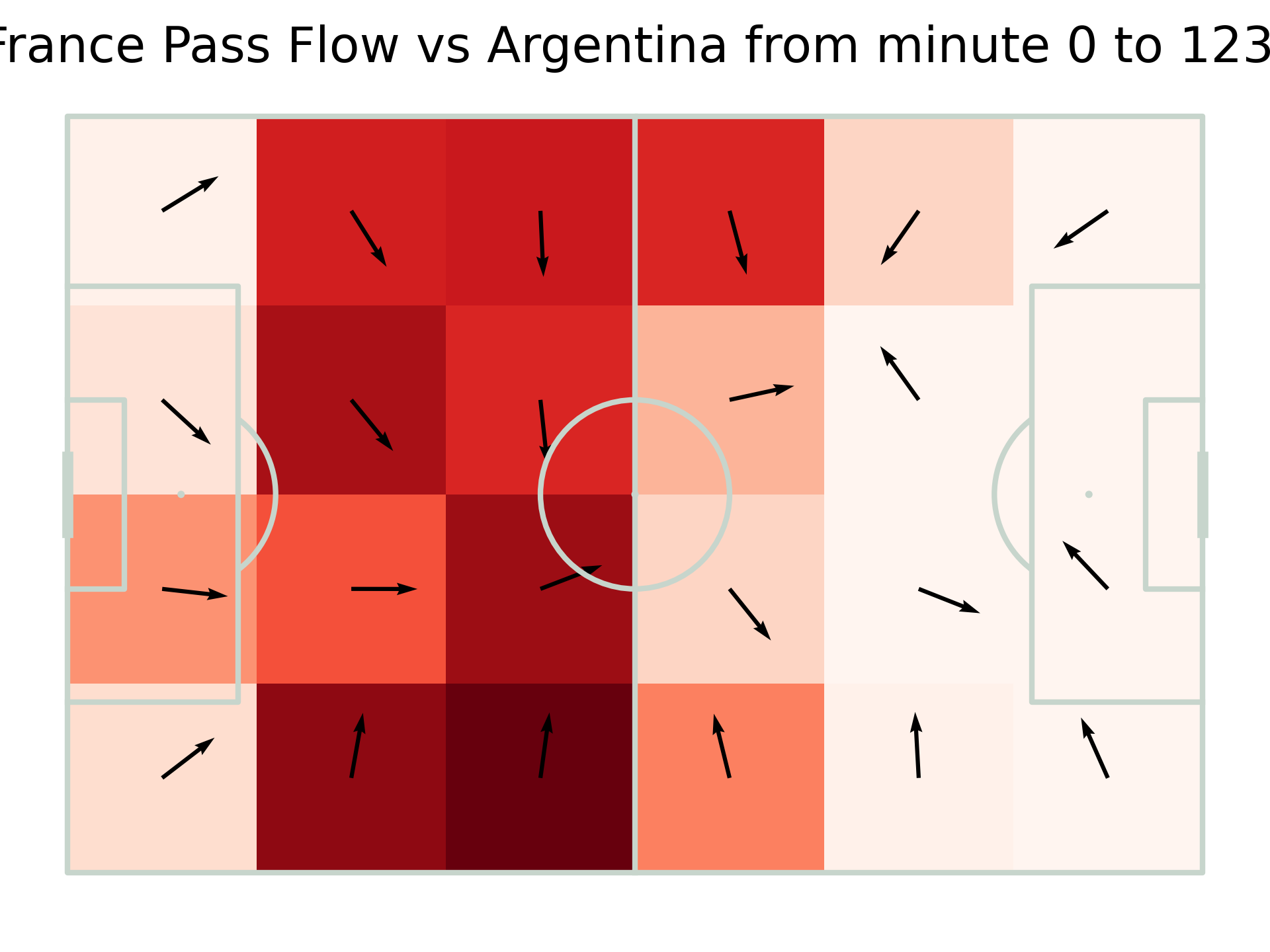 Argentina vs France Pass Flow — France
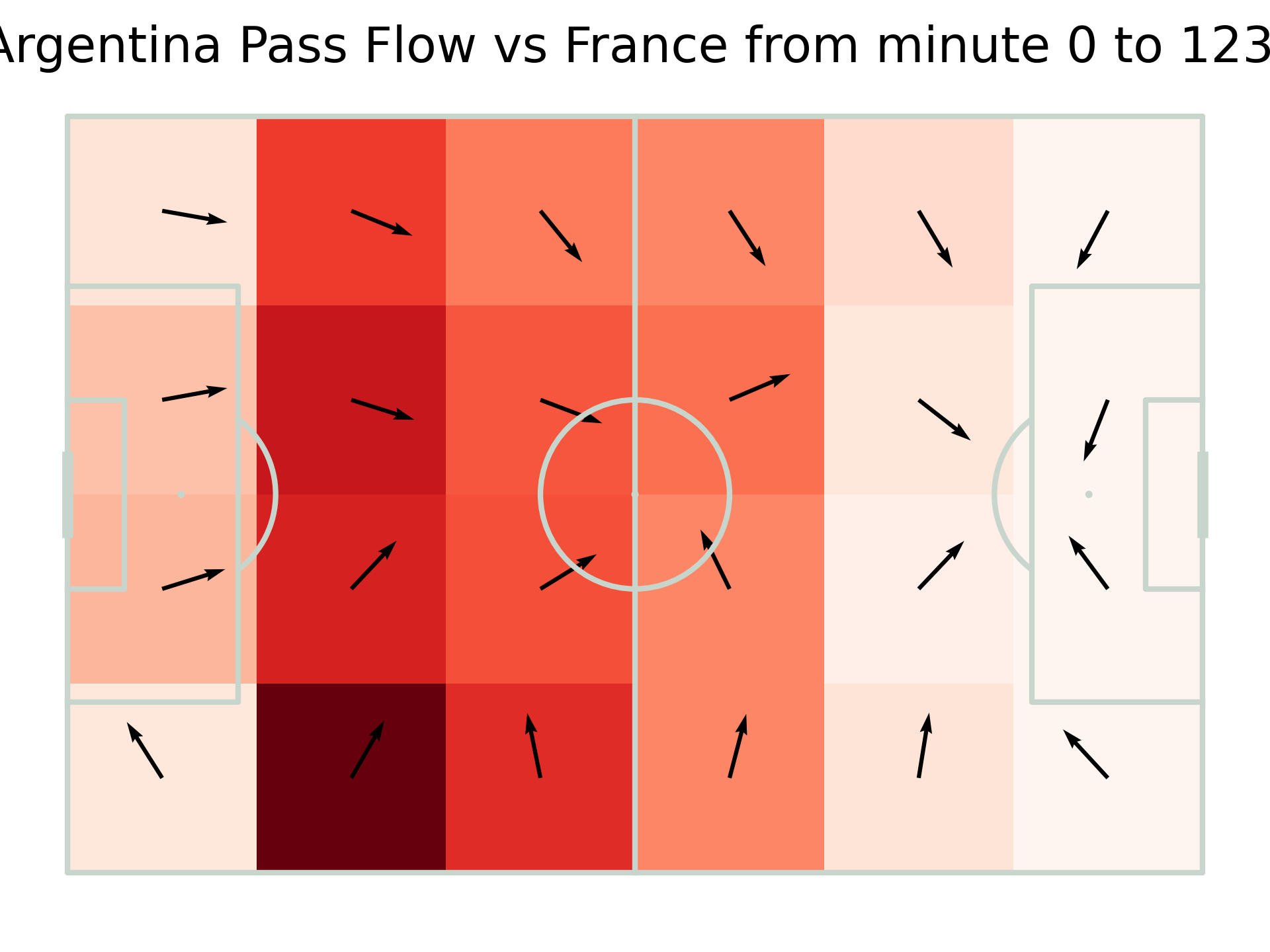 Argentina vs France Pass Flow — Argentina
Argentina’s pass flow reveals a more balanced and progressive pattern in possession, with repeated entries into attacking zones and more aggressive vertical ball movement. Rather than merely trying to control possession, Argentina’s structure allowed them to progress the ball into dangerous areas more consistently, exploiting asymmetric channels down the pitch and creating overloads that unsettled France’s defensive block.
One of the defining features of Argentina’s approach was the role of Nahuel Molina down the right flank. His occupation of wide territory and vertical progression helped Argentina maintain width while allowing Lionel Messi to drift slightly inside. This shape created space for Messi to operate between France’s left-back and left center-back, exploiting half-space pockets that are traditionally high-value zones in modern football tactical analysis.
Key Individual Profiles
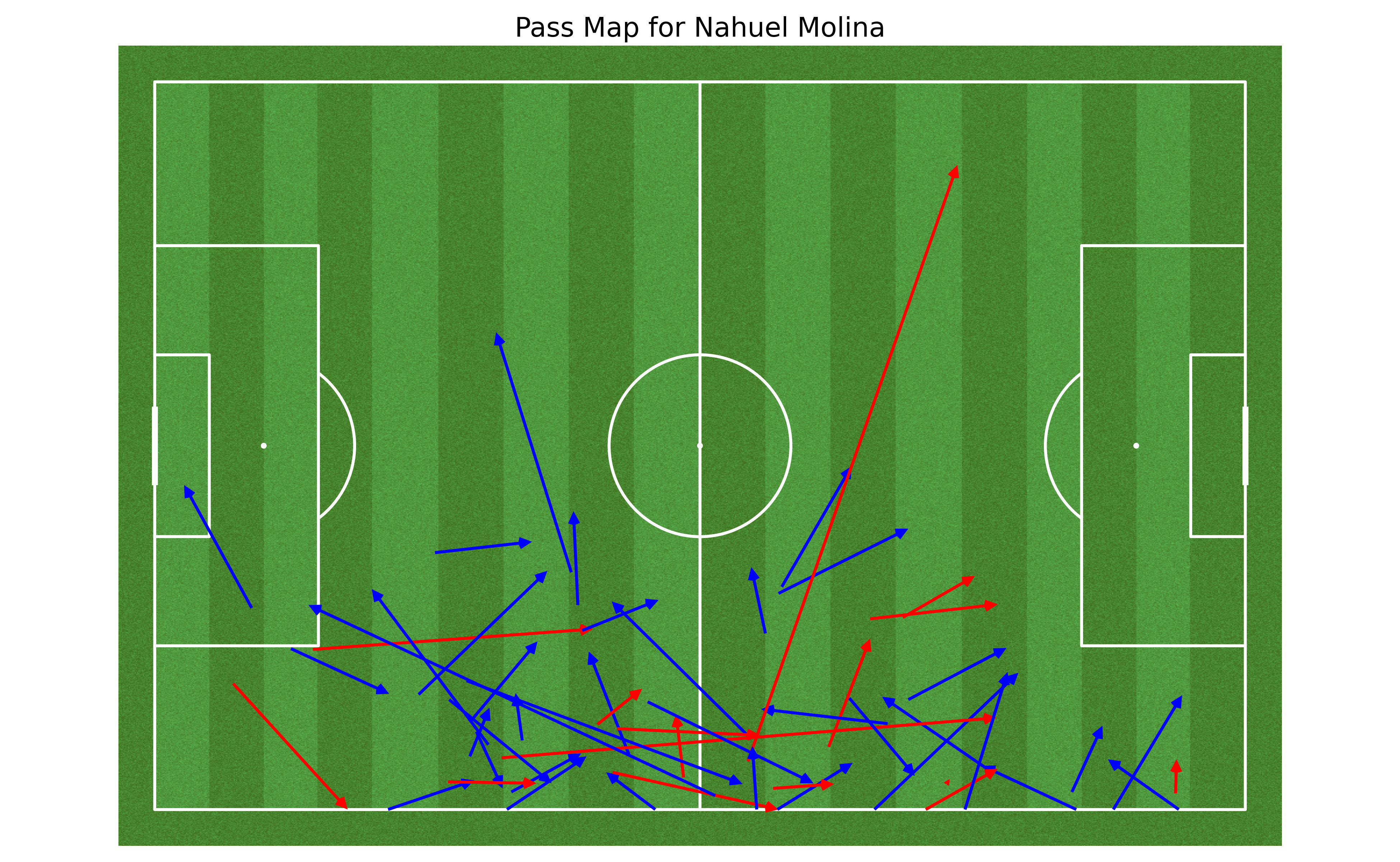 Nahuel Molina Pass Map
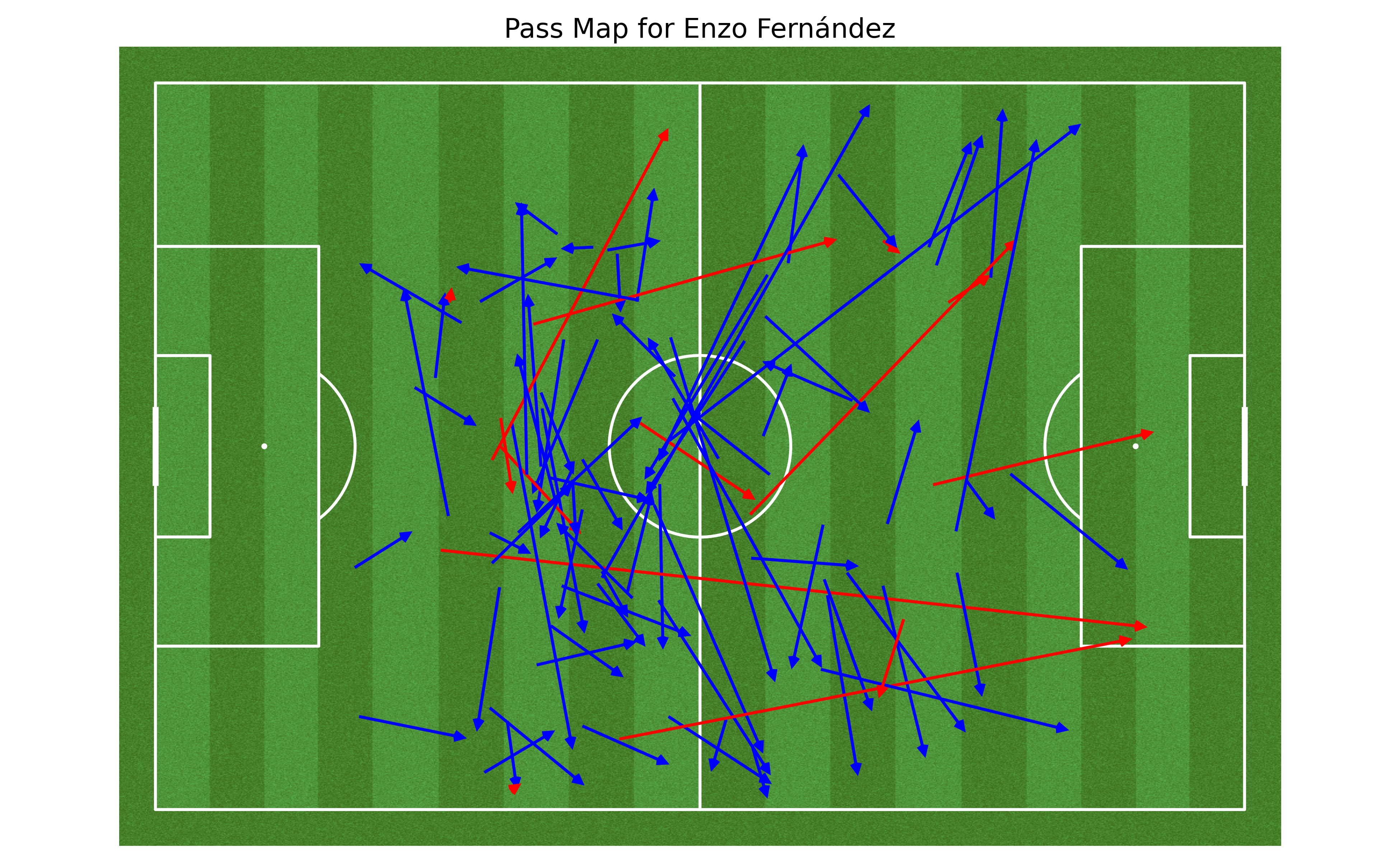 Enzo Fernández Pass Map
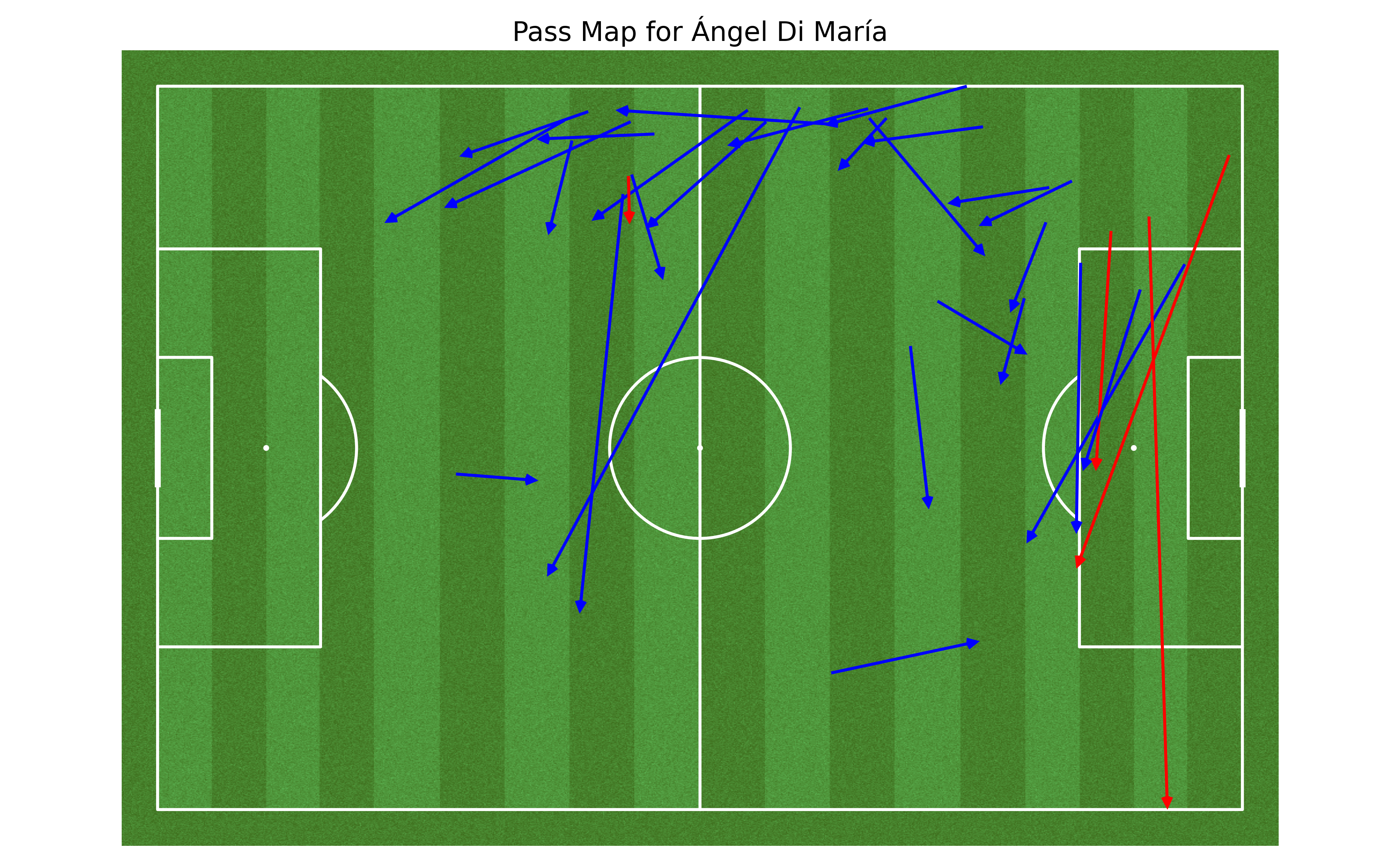 Ángel Di María Pass Map
At the heart of Argentina’s progression was Enzo Fernández, whose deep positioning and range of distribution helped Argentina link defense to attack. Fernández often occupied a central pivot role, providing stability without hindering forward connection. His passes bridged midfield pressure zones and opened up routes into more advanced attackers — a key trait of successful central midfield play in high-pressure matches.
Meanwhile, Ángel Di María’s heat and pass map show how he stretched France’s defense from the left. His participation early in the match created diagonal threats, drawing defenders and opening room for teammates to exploit central and right channels, and ultimately contributed to Argentina’s early two-goal lead.
Lionel Messi Pass Map
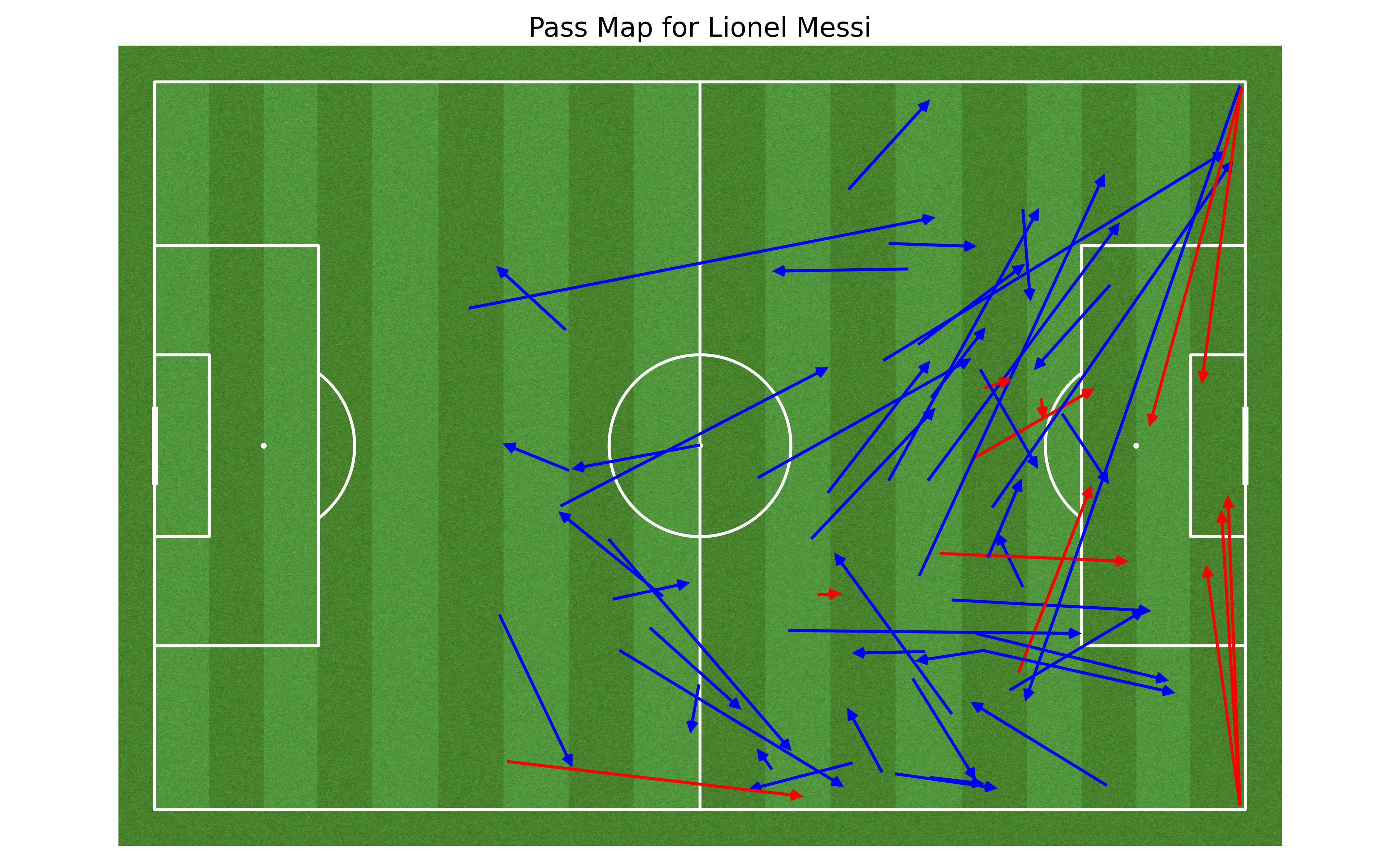
And then there was Messi — the orchestrator. When you examine Messi’s individual pass map, the density between lines becomes undeniable. His distribution was not limited to simple link play; instead, he consistently attempted progressive balls into the attacking third, including forward diagonals and vertical entries inside the box. Messi’s unsuccessful passes often represent high-value attempts that sought to break France’s defensive shape — not just low-risk passes to retain possession.
This structural contrast is critical: France’s build-up focused more on possession and circulation in deeper zones while Argentina’s movement was designed to exploit specific spatial corridors and create imbalance. Argentina managed to force France out of their comfort zones, drawing defenders out of position with off-ball movement and intentional spatial occupation.
In the first half, Argentina’s tactical design created two clear goals — one from Messi’s penalty and one from a sweeping counterattack finished by Di María — before France finally found traction late in the game. By maintaining their spatial intent and progressive aggression deep into extra time, Argentina sustained threat phases that helped them dictate both tempo and territory.
What this match illustrates, beyond drama and individual brilliance, is the power of controlled spatial exploitation over simple possession metrics. Argentina’s ability to structure their play around key channels, to exploit half-spaces and to find progressive verticality under intense pressure underscores a deeper narrative about how elite teams construct and maintain offensive momentum.
This analysis is a testament to the spatial mechanics of football and the tactical intelligence that separates iconic performances from merely good ones.